A Legacy in Step and Sound: Dr. Farrell Reflects on 30 Years in Music Education
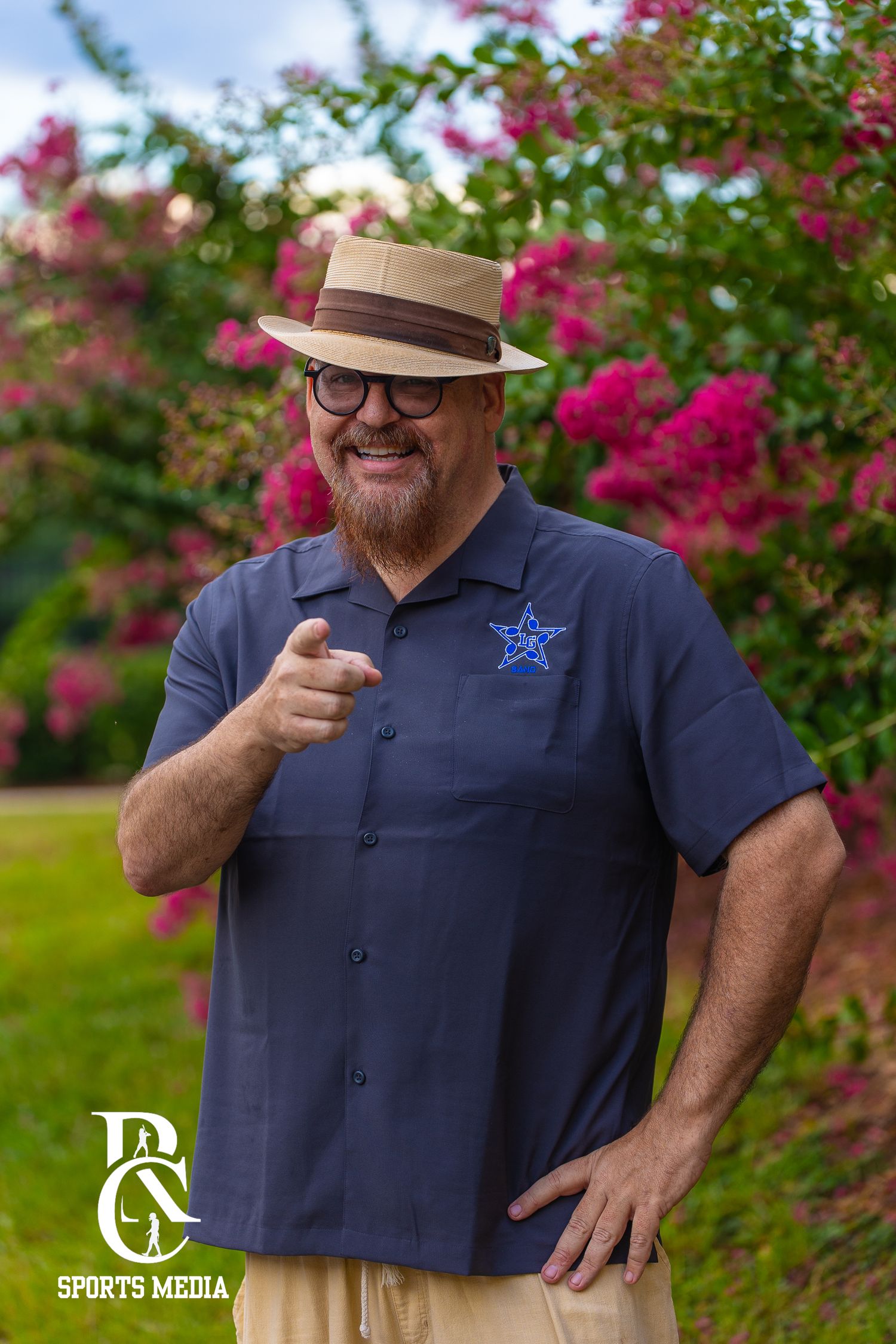
After more than 30 years in music education—20 of those at LaGrange High School—Dr. Farrell has watched marching band evolve into something far more than a halftime performance. His work has become a cornerstone of the school’s identity, leaving a lasting impression not only on the field but in the lives of countless students.
“The days are long, but the years are short,” said Farrell, reflecting on the decades of dedication that have defined his career.
Farrell’s path to the podium was not instantaneous. He describes his journey into music education as a gradual unfolding, shaped by powerful moments that stuck with him. One such moment came during his sophomore year of high school, when his band played the march British Eighth under the direction of Bill Locklear—a teacher who, though not always popular among students, left an undeniable mark on Farrell’s musical vision.
“He would hand me vinyl records and introduce me to great band music and expand my knowledge,” Farrell said. “One day, he hadn’t announced that he was leaving the school yet, but a student was particularly rude to him. I looked at him and said, ‘You really feel appreciated, don’t you?’ He just said, ‘There’s ups, there’s downs, there’s good, there’s bad—but I get to make music every day with great kids.’ That’s the thing that really made me think, ‘I could do that.’”
That mindset has served Farrell ever since.
Long before he stood on the podium, Farrell was fixated on Granger football games—but it wasn’t the touchdowns that captured his imagination.
“My brothers played football, but I spent those football games watching the band,” he said. “That’s the thing that got me all torqued up to ‘one day, I gotta be in band.’”
Two decades at the same school is uncommon in the world of band directing, where career paths often take directors from school to school every few years. But for Farrell, the relationships and continuity at LaGrange have made staying in one place a powerful advantage. That said, such longevity can make it difficult to pick just one favorite moment.
“That’s like asking someone if they have a favorite child,” he said. “Things start to blur together. The years, the people, the shows—they start to run together. But there are those moments that stand out.”
Among those standout moments is the 2017 halftime show I Want My MTV, a high-energy production packed with iconic pop and rock hits.
“That may be one of the greatest halftime shows I’ve ever put on the field. Top to bottom, that thing has stuck in my mind,” Farrell said. “About four years ago, we played a show called A Night at the Movies and it’s in my head.”
But Farrell is quick to say that the most lasting memories aren’t always tied to perfect performances. He lights up when recounting the smaller, more personal stories: a student crawling across the field to hit their formation, a clarinet player bringing a Ziploc bag full of grapes and calling them “greens,” and the everyday conversations that quietly built confidence.
“It’s a lifetime of great moments,” Farrell said.
Behind each performance is a mountain of preparation that many never see. Farrell pulls back the curtain on what it really takes to bring a marching show to life.
“The time. The time it takes to prepare things,” he said. “Some think the band is like what they’ve seen in a movie—someone says, ‘Let’s play this’ and everyone just starts. But in reality, people don’t understand the amount of preparation it takes.”
That preparation is especially challenging for younger students, who may be learning how to march and play simultaneously for the first time.
“The hardest part of preparation is working the music and drill until it’s thoughtless and effortless.”
To overcome those challenges, Farrell fosters a culture of mentorship—where upperclassmen support and guide newcomers through their first steps.
“Managing the psychological side—helping people who feel overwhelmed by all that we do feel more confident,” he explained. “The music gets much more difficult, you add motion, the responsibilities are more, and it can be intimidating. So for me, the hardest part is dealing with the anxiety and fear of your students.”
“One thing we have always cultivated is that the older students have a mindset of helping younger students,” he said. “Then when the younger students grow up, it’s their turn to help the younger students. There’s been research and study upon research to prove that you can learn better from your fellow students than you can from me.”
As spring turns to summer, Farrell’s favorite season begins—the creative process of shaping the next show. Every year, that familiar spark returns when he starts collaborating with rising seniors.
“Around April or May, you start to get spring fever and also get worn down by all the busyness,” he said. “But then I start talking to the juniors about what we’re gonna do for their senior show. The ideas start, and you see those rising seniors get excited. You see them almost giddy like first-year marching students again.”
This fall, LaGrange Band will present a new show titled Dancing Through the Decades, featuring popular dance music from various eras, with each movement showcasing a different decade and style.
The LaGrange band put on a stellar post-band camp preview show performance, giving us more insight into what we’ll see on the field and in the stands.
Even after three decades in the classroom and on the field, he’s still energized by the creativity and the music. It’s not just a job—it’s a legacy in motion.
As always, marching bands rely on community support. Whether it’s providing a snack post-practice, donating some cases of water, or learning how you can become a supporter, please reach out farrellrj@troup.org.